
Even as Internet Access Is Framed a Human Right, Government Moves to Unilaterally Cut Canadians Off Online with Bill C-8

Bill C-8, “An Act respecting cyber security,” represents a grave threat to Canadians’ fundamental freedoms.
Introduced on June 18, 2025, and currently under committee review in the House of Commons (as of October 3, 2025), this bill grants unchecked ministerial powers to secretly disrupt telecommunications, potentially silencing Canadian citizens and violating their privacy, without judicial oversight.
This Bill amends the Telecommunications Act to add “security” as a policy objective, empowering the Minister of Industry to issue orders prohibiting telecom providers from providing services to “specified persons” on “reasonable grounds” of threat, such as interference or sabotage. No compensation is to be made for losses, no appeals are allowed, and only vague annual reports to Parliament will provide the minimalistic accountability required.
Sections 15.1 and 15.2 of Bill C-8 allow for secret orders, enforceable indefinitely and without disclosure. Section 15.4 allows compelled disclosure of personal data. Administrative Monetary Penalties (AMPs), designed to enforce compliance, are shown to be up to $25,000 for an individual’s first contravention and $50,000 for subsequent violations, while businesses would face up to $10 million for the first contravention and $15 million for subsequent contraventions. More serious violations will see criminal charges pursued with potential for significant jail time.
Civil liberties groups believe that this legislation prioritizes state power over individual rights, warning it could enable authoritarian control, echoing past unconstitutional actions such as the invocation of the Emergencies Act in 2022. They are demanding urgent amendments to safeguard expression, privacy, and due process.
The Canadian Constitution Foundation (CCF) and Canadian Civil Liberties Association (CCLA), argue the Bill risks “irreparable harm” to privacy and association, with vague terminology inviting abuse. Government officials have denied any intent to censor but critics, like CCF’s Josh Dehaas, plan to refute this, “I worry that this law could be used to secretly cut off political dissidents from their phone or internet service on the pretense that they may try to manipulate the telecom system. Such an action would violate our most cherished freedoms including free speech.” CCF Litigation Director Christine Van Geyn agrees that the government can’t be trusted with such power unless proper safeguards are in place.
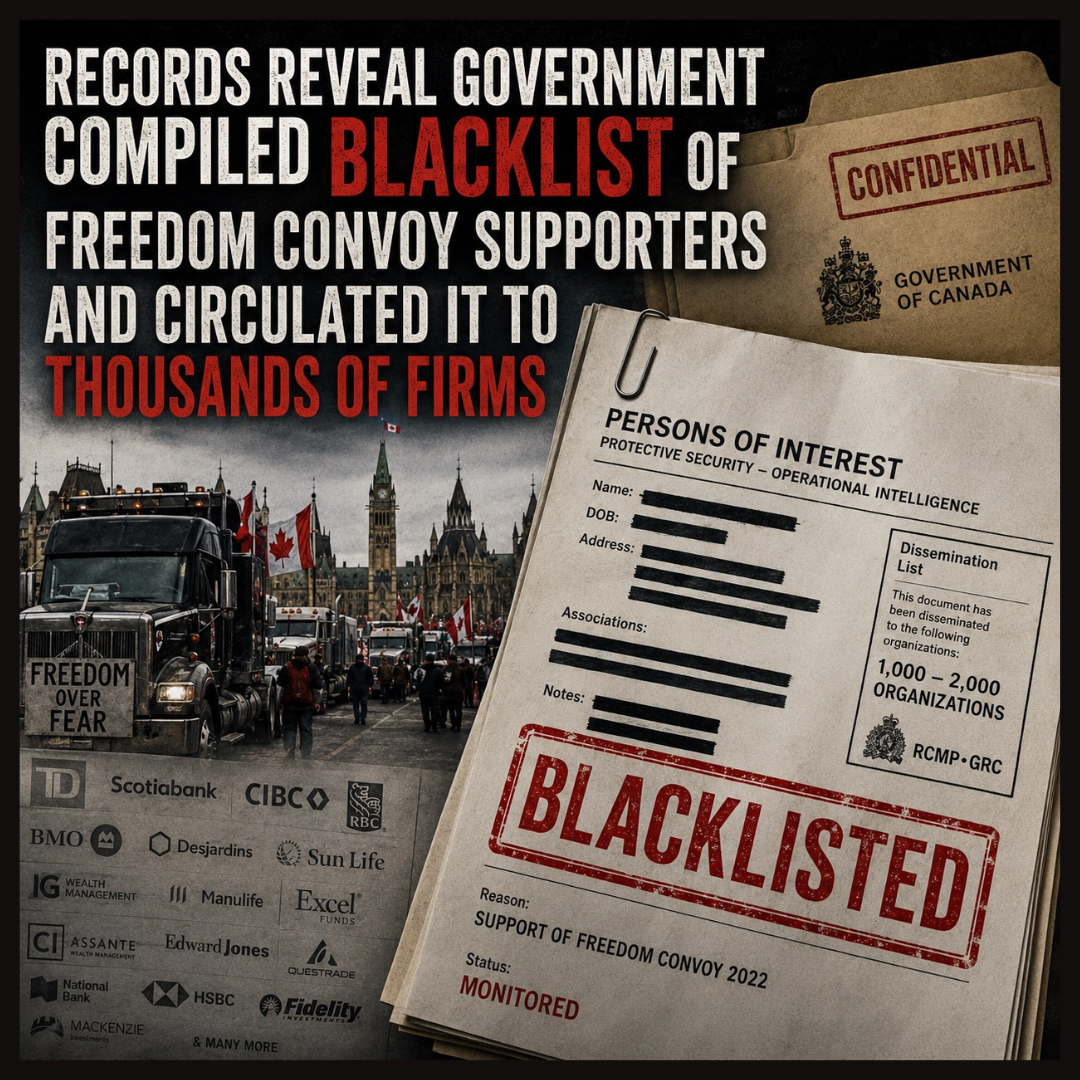
Matt Strauss, MP for Kitchener South – Hespeler, highlights how this could create a “digital gulag,” silencing critics like they did during the Freedom Convoy. He spoke of the unprecedented powers granted, and expressed justified concerns over Section 15.4 (compelled disclosure of private data), violating our Charter s. 8 (unreasonable search and seizure) and s. 7 (security of the person) by bypassing any requirement for warrants.
Privacy Commissioner Philippe Dufresne recently testified, also urging privacy enhancements amid concerns over warrantless data collection.
It is widely agreed upon by all who value our Rights and Freedoms that, in order to protect our Charter, Bill C-8 requires (at the bare minimum) judicial warrants for orders, clear threat definitions, appeal rights, and sunset clauses.
As of October 30th, Bill C-8 remains in the House of Commons Standing Committee on Public Safety and National Security (SECU), with hearings continuing into November.
Once again, we find ourselves in urgent need of safeguarding against alarming government overreach. This current government has shown time and again that, regardless of the face at the helm, their intention is to strip the rights and freedoms of Canadians, one encroachment at a time, under whatever label of safety, security or national interest that they believe we will fall for.
Every Canadian should reach out to their local representatives immediately and demand scrutiny. Regardless of whether you believe this will affect you personally, we all need to speak up – once again our freedoms depend on it.
To read the New Release written by the Canadian Constitution Foundation, click here



0 Comments