
Ontario Court of Appeals Strikes Down Law for CBSA Officers to Search Personal Electronic Devices at Border
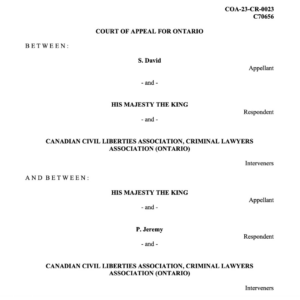
In a case challenging the constitutionality of the search of digital devices at our borders, the Ontario Court of Appeal has ruled that the low threshold used to justify these searches is unconstitutional and inappropriately restricts the individual’s Charter rights.
The ruling acknowledges the unique issues associated with electronic devices, the vast and inherently personal information contained within, and the need for a higher threshold to justify these searches.
“The contents of these devices attract some of the strongest privacy interests known to law because they are a window into their users’ lifestyles, beliefs (…) and much more.”
The Crown argued the act of crossing the border is a choice and the resulting expectation of privacy is lowered; if you do not want your devices searched, your choice is to not travel.
The appeal court correctly asserts that choosing between one protected right and another is not acceptable. “It is the state’s burden to establish constitutional search powers, not the individual’s burden to avoid scenarios where they may be unconstitutionally searched.”
The appeal court decision stressed that officers must have a “reasonable suspicion” based on an objective set of facts, with the expectation of finding evidence of violation prior to searching their devices.
This challenge was initiated by two men arrested for the horrible and inexcusable offence of child pornography, after evidence was found during a search of their devices.
While the appeal court agreed that this was a breach of their Charter rights, when viewed with a higher standard of scrutiny, they determined both cases should still proceed, as reasonable suspicion existed.
Mr. Pike, who had seen his charges acquitted due to the breach of his Charter rights, has now had the acquittal overturned and will face a new court date that will include the evidence from his devices.
Mr. Scott had been convicted and sentenced to 23 months of house arrest. The appeal court upheld his conviction but stated that sentencing was too lenient, pointing to a 3 year jail term as more appropriate. Because he has served more than half of his sentence, no further action will be taken.
To read the decision, click here
To read the Canadian Civil Liberties Association News Release, click here




0 Comments