Pastor Artur Pawlowski’s Mischief Charge Upheld, Rules Alberta Court of Appeal
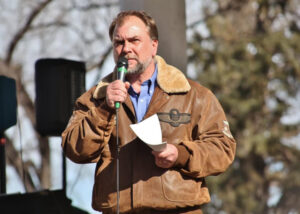
Pastor Artur Pawlowski’s legal battle has come to an end with the Court of Appeal of Alberta upholding the original guilty verdict of inciting mischief and dismissing his request for appeal.
His case stems from a speech given February 3rd of 2022 in Coutts Alberta, adjacent to the blockade of highway 4 where covid lockdown protests continued to restrict traffic.
According to the case summary, Pastor Pawlowski drove to a location where he knew protestors would be gathered and, with the aid of a microphone, he offered motivation to them, telling them they are “the heroes of the solidarity movement” and that they should not “dare break the line”. He said, “Do not lose your momentum”. He urged his audience, “here is your opportunity to hold the fort. Do not break the line. Don’t do it.” He then remained in the Coutts area for a couple of hours before returning to Calgary.
The judgement confirmed that the blockade itself did indeed meet the criteria for mischief, stating that Section 430(1)(c) provides, “Everyone commits mischief who wilfully… obstructs, interrupts or interferes with the lawful use, enjoyment or operation of property.”
While Pastor Pawlowski did not remain onsite for long, nor did he participate actively in the blockade, the judge nonetheless found the content of his speech to be such that the intent was clearly to incite protesters to continue committing mischief, thereby finding him guilty of inciting mischief.
The judgement further addressed the aspects of the Charter (section 2(b)), that protects freedom of thought, opinion and communication, and section 1, which provides justification for limitations to these rights.
While it was acknowledged that his speech is protected under section 2(b), it is further clarified that this does not mean the appellant acted with “legal justification” in inciting mischief; an act of expression that is protected by section 2(b) may also constitute a criminal offence and, therefore, not be legally justified. Section 1 of the Charter allows expressive acts that fall within the protection of section 2(b) to nevertheless be criminalized so long as the subject offence constitutes a “reasonable limit” that “can be demonstrably justified in a free and democratic society”. As a result, the appellant cannot rely on section 2(b) for “legal justification”. Freedom of expression is subject to “reasonable limits prescribed by law as can be demonstrably justified in a free and democratic society”.
The final statement by the appeals Court justice states, “While the appellant is correct that peaceful, lawful and nonviolent communication is entitled to protection, blockading a highway is an inherently aggressive and potentially violent form of conduct, designed to intimidate and impede the movement of third parties. Canadian political convention, the common law, and the Charter protect peaceful protests. However, mass obstruction of public highways is not a form of peaceful protest. The fundamental freedoms of expression and assembly do not encompass obstructing public highways or inciting anyone else to do so. In summary, the appellant has failed to demonstrate any “legal justification” that would bring his conduct within s. 429(2) of the Criminal Code.”
Since the start of covid, we have seen our Charter challenged in our courts, in ways it has never been before. Not all cases have been wins, but there are many cases yet to see resolution.
We will continue to stand for our Charter, beside all who endeavour to see it strengthened and restored to its rightful position.


0 Comments