
Emergencies Act
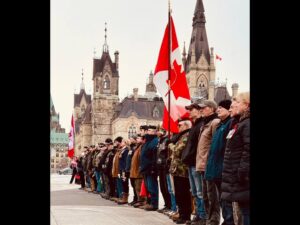
Police on Guard stands with every citizen’s fundamental right to protest. Police on Guard does not condone any action within a protest that may violate any federal or provincial legislation. In an effort to answer many questions we’ve received regarding the Emergency Act we have reviewed the legislation. What has become clear is that the nation is divided, the rule of law is in question, and Canadians are standing up for their unalienable rights in various ways whether it be by attending peaceful protests, donating to peaceful protests, or expressing their support through numerous mediums.
The Emergency Act preamble states:
“AND WHEREAS the Governor in Council, in taking such special temporary measures, would be subject to the Canadian Charter of Rights and Freedoms and the Canadian Bill of Rights and must have regard to the International Covenant on Civil and Political Rights, particularly with respect to those fundamental rights that are not to be limited or abridged even in a national emergency”
Definition of an emergency under the act:
For the purposes of this Act, a national emergency is an urgent and critical situation of a temporary nature that
(a) seriously endangers the lives, health or safety of Canadians and is of such proportions or nature as to exceed the capacity or authority of a province to deal with it, or
(b) seriously threatens the ability of the Government of Canada to preserve the sovereignty, security and territorial integrity of Canada and that cannot be effectively dealt with under any other law of Canada.
The blockades have been described by the attorney general and the government as illegal or unlawful. If it’s unlawful there must be an effective law to deal with it. What attempts have been made to exercise any arrests at the blockades? What violence has occurred? If as claimed the blockade is unlawful why not use the authority under the Highway traffic act or criminal code before declaring an emergency that seeks to cut off funding to the freedom convoy.
Maybe the reason is that no distinction has made between the protesters in Ottawa and blockades at the border. The blockades at the border crossings, if they were not allowing the flow of traffic and goods, would be unlawful. Under the Ontario Highway traffic act section 170(12) lays out a set to fine offence for interfering with traffic. In Ottawa a court injunction was sought regarding the sounding of horns. Why wasn’t an injunction sought to end the blockades before declaring a state of emergency? Both Coutts and Windsor borders were cleared peacefully and without incident. To be clear the injunction on the blockade could even include a court order to allow for the flow of traffic while allowing protesters to protest in the curb lane of traffic. This is the balance that the law must consider in relation to ensuring individual charter rights as is referenced in the Emergency Act itself.
Maybe it’s because the government has been very purposeful in being deliberately vague regarding the two totally different sets of circumstances that exist at the border crossings and in Ottawa. By grouping them together and seizing finances the government hopes to also prevent Canadians from exercising their right to protest in the nation’s capital. An entire blockade of border crossings (that’s not caused by police attempting to prevent truckers from converging on Ottawa), would be unlawful and warrant police intervention as there are effective laws to deal with that situation. Further such a blockade would interfere with the guaranteed mobility rights of every Canadian that the Charter ensures. Every Canadian has the right to exit and return to Canada unimpeded, or travel within provinces. Ironically enough this has been a right that has been violated by the government with travel restrictions, quarantine camps, the Atlantic bubble, etc.
Some of the same funds that are supporting the freedom convoy at the border are also supporting the protest in Ottawa. While blockades can be unlawful (again depending on the manner that they are carried out) the federal government has a much more difficult time justifying seizing donated money that is meant for peaceful protesters in Ottawa. Those protests have been confined to a relatively small geographic area of the city, have been peaceful, have unified Canadians from across the country, and have highlighted the the exact reason we are guaranteed the right to peacefully assemble within a democracy.
The use of the emergency act has already faced criticism in the house of commons, had four premiers’ dissent, and has resulted in civil liberties groups and lawyers expressing concerns that our democracy is being undermined.
Click here to read the News Release on the Emergencies Act from the Government of Canada


0 Comments
Trackbacks/Pingbacks